Guide
Winter Cottage Rentals in Ontario: Roads, Heat, and Ice

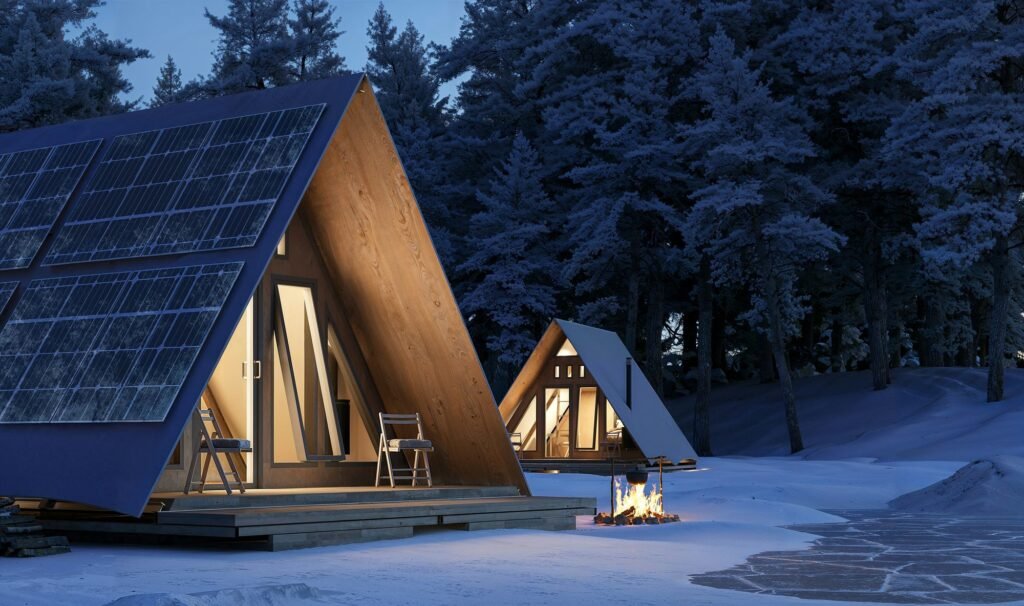
In January an Ontario lake turns into a white field, flat and open, with a cottage at the edge of it and smoke from the chimney if the stay has gone to plan. Winter cottage rentals in Ontario trade the dock and the boat for snow and a woodstove. The trade comes with three questions a listing photo seldom answers: who clears the road, what keeps the heat on, and how thick the ice is.
The Road
The province’s winter driving page starts with Ontario 511, for road conditions and the plows working on provincial highways. It recommends four winter tires with the three-peak mountain snowflake symbol, never a mix, plus a survival kit in the car and a fuel tank kept at least half full. It also says never to pass a working snowplow. Studded tires are allowed on vehicles registered in Northern Ontario. In Southern Ontario they are not allowed, unless the driver lives in the north or is visiting from out of province. A visitor’s studded tires are legal in the south under that exception.
Provincial highways are the easy part. The last few kilometres belong to a county, a township, or a neighbour. The Township of Muskoka Lakes shows how the sorting works. Its own roads are kept snow-packed, treated mainly with sand and a little salt. District roads are kept to bare pavement, with more salt. After a snowfall ends, the township clears priority roads in about 6 to 8 hours and the whole system in about 24, longer when the snow keeps coming. Overnight parking on township roads is prohibited from 1:00 a.m. to 7:00 a.m., November 15 to April 1, so the guest car belongs in the driveway. Ask who clears it.
Haliburton County lists plowing, salting, and sanding as its winter work. Some county roads are maintained by the townships in winter, and a car left on the road or shoulder of a county road may be towed. The Haliburton guide covers the spring load limits that follow.
A road marked seasonal is the one to ask about. The Township of The Archipelago, on the eastern shore of Georgian Bay, does not maintain its seasonal roads from October 15 to May 15 inclusive. Its roads by-law prohibits unauthorized plowing, and a driver caught by snow on one must extricate the vehicle. Private roads are the owner’s job: the township says anyone using a property in winter must keep the private road passable for emergency services. The township will not maintain a private road in an emergency. A renter cannot tell a road’s class from its name. The owner can.
Heat
The Office of the Fire Marshal and Emergency Management calls heating equipment a leading cause of home fires in Ontario. A qualified technician installs woodstoves, fireplaces, and inserts. Heating systems, vents, and chimneys are inspected and cleaned every year. Outside vents stay unblocked. Ashes cool before they go into a metal container with a tight-fitting lid, and the container stays outside. A screen stands in front of the fireplace.
Ontario’s carbon monoxide alarm rules for existing homes widened on January 1, 2026. They apply to any home, cottages named among them, with a fuel-burning appliance, a fireplace, or an attached garage, and now also to one heated by an appliance outside it, such as one in a utility shed. An alarm is required next to each sleeping area and, since January 2026, on every storey, including storeys with no bedroom. In a rental home, the landlord is responsible. The local fire department enforces the Fire Code. A guest who finds no alarm on the main floor of a cottage with a woodstove has a Fire Code problem to report.
Power is the other variable. Hydro One recommends a kit for up to 72 hours without power: a windup or battery flashlight and radio, a battery pack for phones, 2 litres of water per person per day, food that will not spoil, a manual can opener, blankets, a first aid kit, and cash. Outages can be reported through its app, online, or by text. Ask the owner what heats the cottage when the power fails, and whether that source is safe indoors.
Frozen pipes are the owner’s problem until one bursts during a stay. The Insurance Bureau of Canada tells anyone away during the heating season to leave the heat on and have someone check the home, and warns that failing to do so can affect coverage. It also says to know where the plumbing shut-off valves are, so the water can be turned off if a pipe bursts. Ask where the main valve is before it is needed.
Ice
The Lifesaving Society sets minimum thicknesses of clean, hard ice: 10 centimetres (4 inches) for one person on foot, 12 centimetres (5 inches) for a snowmobile or ATV, 20 to 30 centimetres (8 to 12 inches) for a single car, and 30 to 38 centimetres (12 to 15 inches) for a full-size pickup. It advises measuring in several places and checking again, because thickness and quality change quickly and appearance can mislead. Slushy ice, ice that has thawed and refrozen, and layered or rotten ice all deserve suspicion. So does any ice near moving water.
If someone does go through, the society’s 1-10-1 rule gives about 1 minute to get breathing under control and about 10 minutes of useful movement. With a lifejacket on, hypothermia can take up to an hour. Face the direction you came from, rest your arms on the unbroken ice, and kick forward onto it. Then stay flat and roll or crawl away from the hole until the ice is solid or the shore is reached.
The Georgian Bay guide covers moving ice and off-season access on the bay. Ask the owner about that lake’s ice before anyone walks out.
Snowmobile Trails
Ontario law requires a valid Ontario Snowmobile Trail Permit to ride the trails prescribed by the Ontario Federation of Snowmobile Clubs. Besides season permits, the federation sells a multi-day permit for a minimum of two consecutive days. Ask whether a trail is within reach of the cottage before arranging a sled.

Ticks
Ontario says blacklegged ticks can be found any day the temperature is above freezing, and the Ontario Veterinary Medical Association says the same for pets. A mild January afternoon counts. The pet friendly cottage guide covers the checks.
Before You Book
- Ask who plows the road to the cottage, how soon after a storm, and whether the road is municipal, seasonal, or private.
- Ask who clears the driveway, and check the township’s overnight parking rules.
- Ask what heats the cottage, when the chimney was last cleaned, and where the smoke and carbon monoxide alarms are.
- Ask what happens when the power goes out, and pack the parts of the Hydro One kit you would not want to shop for in a storm.
- Ask where the main water shut-off is and who checks the cottage between guests.
- Ask about the ice on that lake before anyone walks out, and measure it in several places.
- Take the questions to ask a host with you.
For heat in a winter glamping stay, see the Ontario glamping guide. The guide to renting a chalet in Quebec covers that province’s winter tire rule.
Frequently Asked Questions
Are studded tires allowed in Ontario?
On vehicles registered in Northern Ontario, yes. In Southern Ontario they are not allowed unless the driver lives in the north or is visiting from out of province.
How thick does ice need to be to walk on in Ontario?
At least 10 centimetres (4 inches) of clean, hard ice for one person on foot, by the Lifesaving Society’s minimum. A snowmobile or ATV needs 12 centimetres (5 inches). Measure in several places and check again.
Who plows the road to a winter cottage in Ontario?
It depends on the road. The last few kilometres belong to a county, a township, or a neighbour, and private roads are the owner’s job. Ask whether the road is municipal, seasonal, or private.
Do Ontario cottages need carbon monoxide alarms?
Yes, if the cottage has a fuel-burning appliance, a fireplace, or an attached garage. Since January 2026, an alarm is required next to each sleeping area and on every storey. In a rental home, the landlord is responsible.
Do you need a permit to snowmobile in Ontario?
Yes, on the trails prescribed by the Ontario Federation of Snowmobile Clubs. Ontario law requires a valid Ontario Snowmobile Trail Permit. Besides season permits, the federation sells a multi-day permit for a minimum of two consecutive days.